


BMW Motorrad Sport Segment:
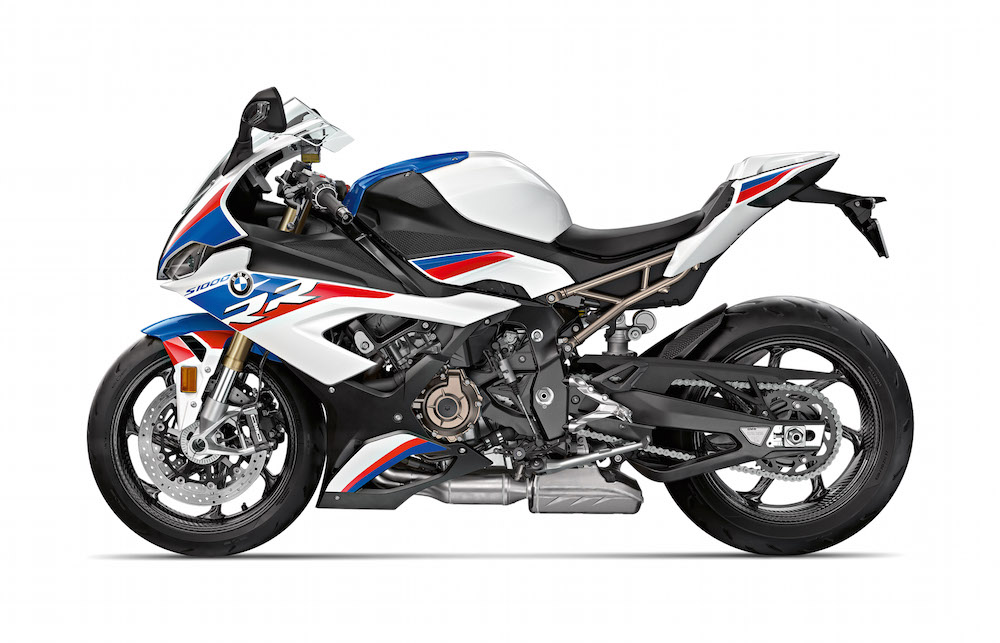
The “Sport” segment is Beemer’s sleeper hit. Far from the flash of the Italian market and the ubiquity of the Japanese sport segment, the BMW “S” models are full-on sportbikes that compete against any comers. Beemer’s “S” range includes the limited-edition, track-tastic HP4 Race model that’s set up to compete on the closed circuit or road courses. This family shuns the classic boxer-twin in favor of an inline-four configuration for its high-revs and horsepower output. Visually, Beemer’s “S” models blend right in with the preponderance of sport/street/super-bikes.
BMW Motorrad Tour Segment:

The “Tour” bikes are more properly labeled sport-tourers. They come with large front fairings for weather protection, and boast lockable dry storage along with comfortable seating as part of the standard equipment package. A full electronics suite delivers all the top-shelf fandanglery to put the range among the top tourbikes on the market in both comfort and safety.
The “R” models carry Beemers boxer-twin mill to button up the mid-range with around 125 horsepower and 92 pound-feet of torque. If it’s inches you’re after, the inline-six plant in the “K” models deliver the cubes with a 1,649 cc engine cranking out 160 horsepower and 129 pound-feet of torque. Across the range, the Euro flavor is impossible to ignore as it sets itself apart from such sport-tour heavyweights as the Honda Gold Wing and Kawasaki Concours 14.
BMW Motorrad Roadster Segment:
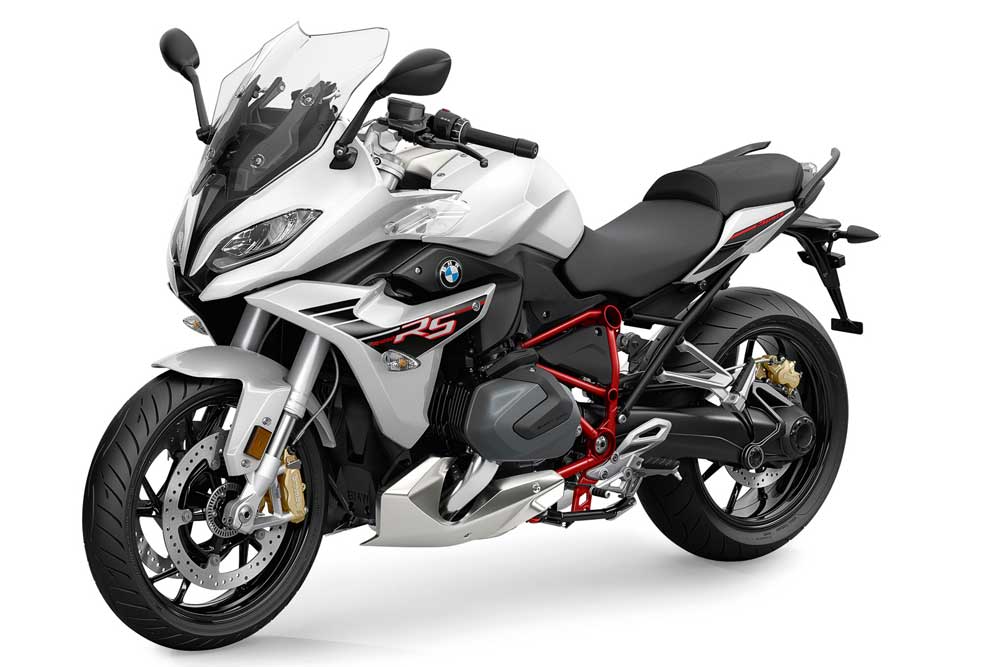
“Roadster” means the same thing to BMW as it does the rest of the world; an essential bike with no superfluous equipment to weigh it down and clutter it up. Beemer’s roadster range is a mixed bag with the entry-level G 310 R and the S 1000 R (not to be confused with the S 1000 RR superbike) along with the pending R 1250 R/RS models. Again, as with the full-on sportbike line, BMW’s roadsters are similar in appearance to much of the rest of the European and Japanese naked-sport/standard families. All components and body panels are absolutely necessary to the function, and these bikes all come with some consideration for a passenger, but the pillion gear is fairly Spartan, as well.
BMW Motorrad Heritage Segment:

BMW’s “Heritage” line is, thus far, a handful of variants based on the R nineT base model. Like the roadsters, there is very little weight wasted on non-essential equipment, but the overall look and frame geometry is more like the old school standards/UJMs, which plays right into the historical aspects of the line.
The base R nineT and “Pure” models deliver a clean look that generally borrows from the standards of the ’70s and ’80s, as does the dual-sport Urban G/S. However, the Scrambler ties specifically into the early dual-surface bikes that were largely home-built custom machines made to be capable off-road while retaining their street capabilities.
The “Racer” brings back the nostalgic café racer look complete with both the classic bullet fairing and tail fairing of the originals, and of course, the boxer-twin plays right into the design. The current lineup runs with the air/oil-cooled 1,170 cc powerplant with 110 horsepower and 86 pound-feet on tap. Another bare-essential ride, the factory leaves off all the electronic engine controls and ride-quality tweaks in a bid to keep prices down and the bikes simple; relatively speaking, of course.
BMW Motorrad Adventure Segment:
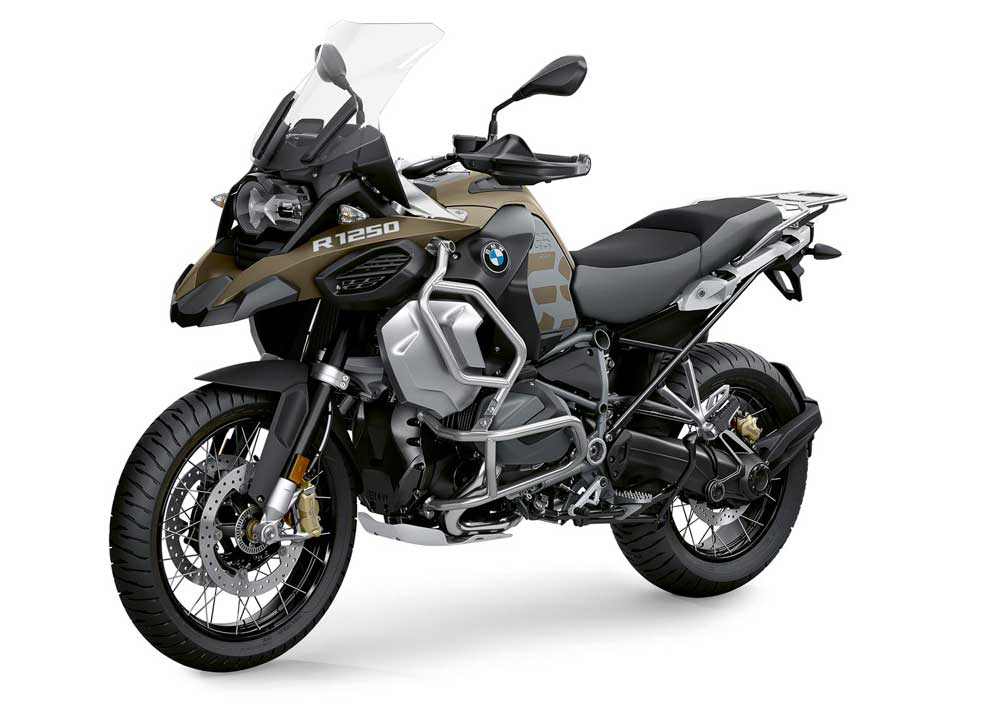
BMW’s adventuresome “Adventure” line is another mixed bag of primary designators, engine size and model suffixes. The range rocks the bird’s beak front fairing with extra fling coverage from the front fender. Vented windshields are a constant across the family for comfort and protection, as are the tall fuel-tank humps and low saddles that are typical of the Adv-bike genre.
As the engine prefixes indicate, the line comes in a range of engine sizes and types starting with the thumper-driven G 310 GS at the bottom of the foodchain. The “F” models have a parallel-twin configuration across the F 750 GS and F 850 GS and GS Adventure, and the “R” units, naturally, tote a boxer-twin mill. At the top of the totem pole we find the “S” model with a liter-size, inline four-banger that turns the S 1000 XR into a streetwise tourbike par exellence.
Unlike Beemer’s tourbikes proper, the GS line rolls off the showroom floor sans luggage, but the factory offers panniers as part of a robust accessory line that lets you kit out for anything up to and including globetrotting “Long Way Down/Round” adventures and Dakar-style desert rallies.
BMW Motorrad Urban Mobility Segment:
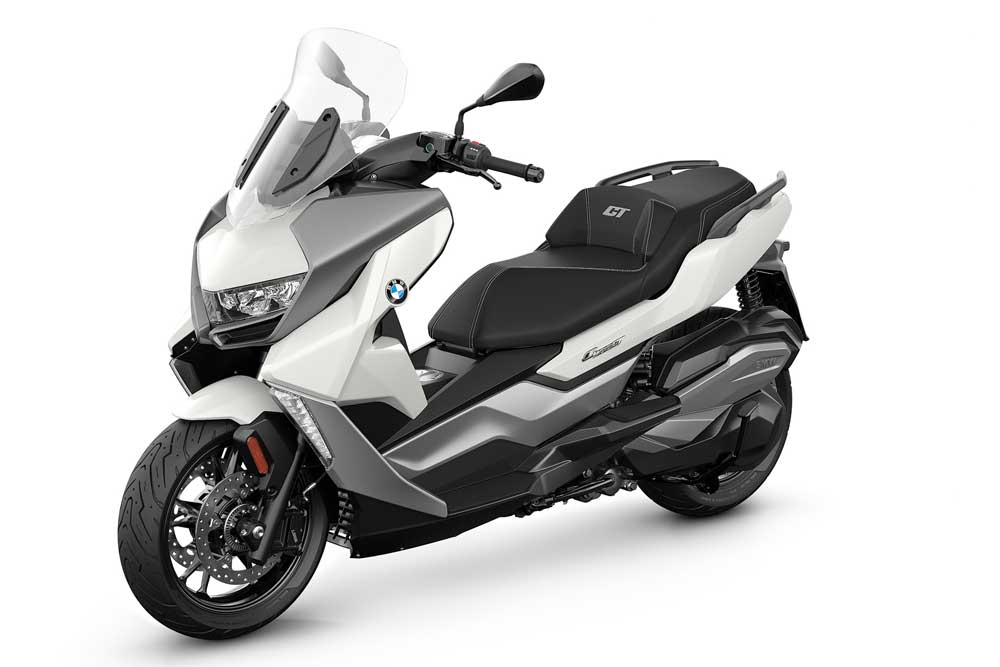
BMW’s scooters all fall under the “Urban Mobility” umbrella. Far from the classic Italian-style rides, Beemer’s models are more substantial, and without exception, all qualify as a Maxi-scoot (C 650 GT), or at the very least, a Mini-Max (C 400 X, C-evolution). The “C” model designator indicates a swing-mount drive system that uses the engine and constantly-variable transmission (automatic) as stressed units. This replaces the swingarm and uses a monoshock to support and dampen the rear wheel.
Internal storage compartments provide some built-in dry stowage, and overall, the “C” line is geared toward urban commuters, professional/office workers, and students. Don’t be fooled by the fact that these rides are scooters. The C 650 GT’s parallel-twin, for example, cranks out a respectable 60 ponies with a top speed at or above 112 mph. Yeah, it’s like that.
The “C” line is also BMW’s vanguard for the EV market. The C Evolution delivers 48 horsepower with 53 pounds of torque, a 0-60 time of 2.8 seconds and up to a 99-mile range to make it a functional plug-and-play commuter that’ll definitely get out of its own way.